

[ad_1]
In his recent piece about umpire accuracy, Davy Andrews famous that plate umpires accurately known as 99.26% of coronary heart zone pitches in 2023. Once I first learn that quantity, I didn’t assume missed calls within the coronary heart zone warranted any nearer investigation. For many of us, ninety-nine level something is nearly as good as 100; you don’t spend a lot time worrying concerning the 0.01% of germs Purell can’t kill. Then once more, for those who have been to think about the sheer quantity of micro organism in your palms at any given second, you would possibly go for a second squirt of sanitizer. A tiny share of an incredible quantity continues to be going to be a fairly large quantity. The identical is true for missed calls within the coronary heart zone. There aren’t fairly as many pitches in an MLB season as there are germs in your cellphone display, however there are sufficient that a couple of tenths of p.c of coronary heart zone choices nonetheless represents a fairly hefty determine. In 2023, plate umpires watched 381 pitches sail over the guts of the plate with out signaling a strike. Once you body it that approach (pun completely supposed), it really sounds fairly dangerous.
I wasn’t almost as shocked to be taught that plate umpires missed 428 calls within the chase zone final season. Choices within the chase zone are designed to look hittable out of the pitcher’s hand. An particularly proficient catcher could make them look hittable as they attain his glove, too. In the meantime, a batter would possibly wish to earn a couple of further balls contained in the zone, however he doesn’t have the identical affect over calls as do his opponents. In addition to, if a hitter acknowledges {that a} pitch is coming for the guts zone, he’s not going to wriggle and contort his physique in hopes of inducing a missed name – he’s going to swing. To that finish, batters are more likely to swing within the coronary heart zone than the chase zone, which signifies that on a charge foundation, umpires miss considerably extra calls over the guts of the plate as a result of there are fewer complete pitches there that should be known as. Whereas 381 and 428 are comparable figures, batters took 2.4 instances as many pitches within the chase zone as within the coronary heart zone. Apparently, it’s more durable than I believed to name strikes what they’re.
As egregious as balls known as within the coronary heart zone may be, they don’t garner almost as a lot consideration as strikes known as outdoors the zone. It’s a extra widespread incidence to see a batter up in arms over a foul known as strike than it’s to see a pitcher or catcher expressing an identical diploma of anger over a pitch that wasn’t known as in his favor. YouTube and Twitter are replete with “worst known as strike” compilations, however the worst known as balls typically slip underneath the radar – not less than when FanGraphs isn’t writing about them.
To be clear, I’m not right here to rag on umpires. Relatively, I’m considering what would possibly make them make errors on essentially the most simple of strikes. In any case, most meatballs don’t appear like this:
Loads of them appear like this:
There was no scarcity of analysis into the elements that affect missed calls, each inside and outdoors the strike zone. Nonetheless, I’m interested by what would possibly differentiate balls known as within the coronary heart zone from these known as across the edges. Coronary heart zone balls are uncommon, however with so many seasons of knowledge at our disposal, there’s a massive pattern dimension to seek for significant patterns.
Once I first began wanting into this matter, I believed it may very well be a useless finish. What if balls known as within the coronary heart zone have been simply fluky errors? What if there wasn’t any rhyme or motive? Alternatively, I anxious that coronary heart zone balls may not be any completely different from missed calls in the remainder of the strike zone. Fortunately, I by no means reached such an deadlock. As a substitute, I discovered so many notable patterns that I don’t even know what to do with all of them. Effectively, really, I do. I’m going to dump all of them on you, expensive reader.
Location

The graph above compares the areas of all in-zone pitches known as balls over the previous 5 years (2019-23). The blue bars characterize coronary heart zone balls, and the crimson bars characterize in-zone shadow zone (IZSZ) balls. “Prime” refers back to the higher third of every zone (both coronary heart or in-zone shadow), “center” refers back to the medial third, and “backside” refers back to the decrease third. Equally, “left,” “middle,” and “proper” check with the vertical thirds of the zone going through third base, second base, and first base, respectively.
To calculate the figures you see in entrance of you, I took the variety of known as balls in every location and divided that by the entire variety of takes in every location. I then divided the outcome by the league common ball charge in that zone (once more, both the guts zone or the IZSZ) and multiplied by 100 to place every part on the size of the acquainted “+” stats. Thus, a “Coronary heart Zone Ball Price+” of 100 means pitches in that location of the guts zone are simply as more likely to be known as balls as they’re anyplace else within the coronary heart zone; the identical goes for “In-Zone Shadow Zone Ball Price+.” I also needs to point out that I eliminated zone 5 (the midpoint of the guts zone) from the info because it doesn’t have an equal within the shadow zone. (Missed calls in zone 5 are extremely uncommon anyway!) I promise it’s not as sophisticated because it sounds. Briefly, it’s all about placing each missed strike name on the identical scale for straightforward comparability.
By and huge, the identical basic tendencies are obvious in each the guts zone and IZSZ. For example, plate umpires make way more errors on the prime and backside of the zone than within the center. That’s true all through the strike zone. Nonetheless, there isn’t a significant distinction between the numbers on the prime and backside of the guts zone, whereas umpires have way more hassle on the prime of IZSZ than the underside.
Conversely, whereas plate umpires are fairly constant from left to proper within the shadow zone, they name way more balls on the appropriate third (first base facet) of the guts zone. That is true no matter batter handedness, pitcher handedness, and platoon matchup, though the impact is noticeably stronger for left-handed batters than right-handed batters; it could appear that when lefties are batting, umpires have extra hassle calling “inside” pitches than “outdoors” pitches within the coronary heart zone. This impact isn’t tied to a selected pitch kind, both, and it’s constant yr after yr. Umpires have known as a disproportionate variety of balls in the appropriate third of the guts zone in each three-year interval of the Statcast period (2015-present). There may be simply one thing concerning the first base facet of the guts zone that makes umpires wish to name a ball.
Pitch Sort

I constructed an identical graph sorting in-zone balls by pitch kind as a substitute of location, and the outcomes communicate for themselves. Sinkers are way more doubtless than every other pitch to be known as a ball within the coronary heart zone. No such impact exists within the shadow zone. There are another noteworthy tendencies within the knowledge – breaking balls are the pitches least more likely to be misidentified in both zone – however that one blue bar towers over every part else. If the impact weren’t so constant, I’d ensure it was a mistake. However sinkers have been way more doubtless than every other pitch to be known as a ball within the coronary heart zone in each three-year interval since 2016-18. Actually, the impact has gotten even stronger lately, which coincides with the changing role of the sinker within the trendy sport.
There’s clearly lots occurring right here, and there aren’t any straightforward solutions. One might write a complete article about coronary heart zone sinkers alone. For example, velocity actually performs a task, but it surely’s not the driving issue. The probability of a coronary heart zone sinker being known as a ball will increase the quicker the sinker is thrown. Nonetheless, if it have been solely about velocity, these blue bars would even be greater for the opposite fastballs within the knowledge set. What’s extra, even the slowest sinkers nonetheless generate extra known as balls within the coronary heart zone than the typical pitch:
Sinkers by Velocity (2019-23)
| Velocity Bucket | Coronary heart Zone Ball Price+ |
|---|---|
| 89-90 mph | 130 |
| 90-91 mph | 141 |
| 91-92 mph | 105 |
| 92-93 mph | 123 |
| 93-94 mph | 142 |
| 94-95 mph | 133 |
| 95-96 mph | 147 |
| 96-97 mph | 150 |
| 97-98 mph | 175 |
| 98-99 mph | 233 |
| 99-100 mph | 205 |
| 100+ mph | 225 |
Information through Baseball Savant
Arm-side run is also part of it. Changeups and splitters (the opposite pitches recognized for his or her arm-side run) have greater coronary heart zone ball charges than any pitches within the slider and curveball teams. In the meantime, sweepers, which have extra glove-side motion than every other pitch, are the least doubtless providing to lead to a heart-zone ball.
On an identical be aware, sinkers sometimes run in on batters, as a result of they’re used extra typically when the pitcher has the platoon benefit. That might assist to clarify why they lead to extra coronary heart zone balls. That stated, coronary heart zone sinkers usually tend to be known as balls whatever the platoon matchup. Whether or not it’s righty on righty, lefty on lefty, righty on lefty, or lefty on righty, a sinker within the coronary heart zone is all the time extra more likely to be miscalled than the typical pitch. There may be simply one thing about sinkers within the coronary heart zone that makes umpires wish to name a ball.
Platoon Splits

This graph isn’t as dramatic as among the others we’ve checked out, but it surely exhibits that right-handed hitters usually tend to get a ball known as within the coronary heart zone than their lefty counterparts. That is notably attention-grabbing as a result of coronary heart zone balls are extra widespread on the primary base facet of the guts zone, which is the skin third for a righty batter. You would possibly count on missed calls to be extra doubtless on the within a part of the guts zone (and certainly, that appears to play a small function), however evidently, umpires’ bias towards right-handed batters and towards the right-hand facet of the guts zone overpowers any potential bias towards the within third.
For those who break up the info up by platoon matchups, you’ll see that coronary heart zone balls are far more widespread in righty-on-righty faceoffs than every other. Nonetheless, for those who take away sinkers from the info set, that impact disappears. All that is still is the general bias towards righties.
Recreation State
In-Zone Balls by Recreation State
| Recreation State | Coronary heart Zone Ball Price+ | In-Zone Shadow Zone Ball Price+ |
|---|---|---|
| Even Rely | 83 | 93 |
| Batter Forward | 71 | 81 |
| Batter Behind | 277 | 160 |
| No Outs | 94 | 98 |
| One Out | 104 | 101 |
| Two Out | 103 | 101 |
| No Runners | 85 | 95 |
| Runner(s) On Base | 124 | 108 |
| RISP | 123 | 108 |
| Additional Innings | 133 | 113 |
Information through Baseball Savant
On the subject of situational elements, we are likely to see the identical patterns within the coronary heart zone and the IZSZ. Nonetheless, the consequences are extra pronounced on coronary heart zone pitches. For instance, umpires name fewer in-zone balls in hitter’s counts, fewer in-zone balls with no outs, and fewer in-zone balls when the bases are empty. Conversely, they name extra in-zone balls in further innings. These results are seen in each the guts zone and the IZSZ, however they’re extra exaggerated over the guts of the plate. It makes a certain quantity of sense. These elements have extra to do with the plate umpire’s (aware and unconscious) decision-making. The nearer a pitch will get to the middle of the plate, the larger a task psychological elements are going to play in comparison with pitch traits or catcher framing.
Apparently, the only greatest predictor of whether or not or not an in-zone pitch will probably be known as a ball is that if the catcher doesn’t catch it. Over the previous 5 years, IZSZ “wild pitches” and handed balls have been about 4 instances extra more likely to be known as a ball than the typical IZSZ take. In that very same time-frame, coronary heart zone “wild pitches” and handed balls have been about 34 instances extra more likely to be known as a ball than the typical coronary heart zone take. Umpires are solely human, and they are often distracted by a wild pitch/handed ball as a lot as any of us:
Particular person Gamers
Over the previous three seasons (by which coronary heart zone ball charges have saved comparatively secure), the league chief on this specific stat is Tyler Rogers. Amongst 175 pitchers who’ve gotten not less than 250 takes within the coronary heart zone, Rogers leads the best way with a 3.6% known as ball charge. The subsequent closest pitcher is José Ureña at 2.4%, whereas Jorge López is the one different arm with a coronary heart zone ball charge over 2%. The league common since 2021 is a mere 0.74%, whereas the median (min. 250 pitches) is 0.61%.
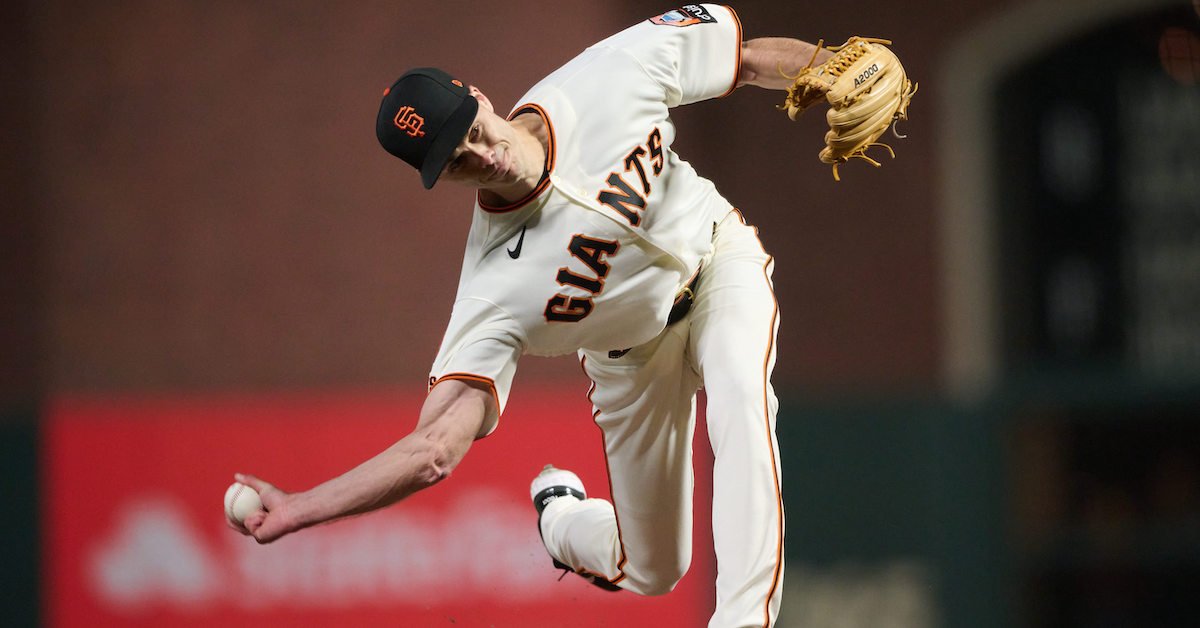
Unsurprisingly, the sinker is the first providing from every of this trio’s three members. Rogers kilos the guts zone along with his submarine sinker, which he throws greater than 50% of the time. Given his funky supply, it’s no surprise he provides umpires hassle. López doesn’t throw his sinker as typically as Rogers, however he throws a lot more durable, and he faces a better share of right-handed batters. Six of his eight coronary heart zone balls got here in opposition to righties, and 6 of eight clocked in at 95 mph or greater. Ureña is essentially the most puzzling inclusion. He added a ton of arm-side run to his sinker final season, however all six of his coronary heart zone balls really got here in 2021 and ’22. Furthermore, just one got here on a sinker. Maybe we will chalk this one as much as small pattern dimension weirdness. In any case, there’s solely a lot we will glean about coronary heart zone balls from particular person gamers.
In the end, there may be way more analysis one might carry out on the subject of missed calls over the guts of the plate. I’m nonetheless curious why umpires name extra coronary heart zone balls on sinkers, extra coronary heart zone balls on the primary base facet of the plate, and extra coronary heart zone balls to right-handed hitters. The impact of catcher framing is one other space for additional exploration. Like I stated, I discovered extra patterns right here than I knew what to do with. Thanks for letting me dump all of them on you.
[ad_2]
Source link
